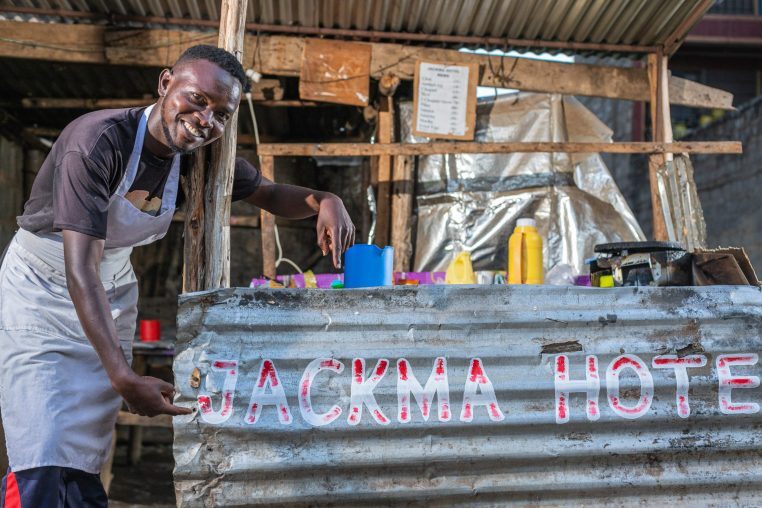
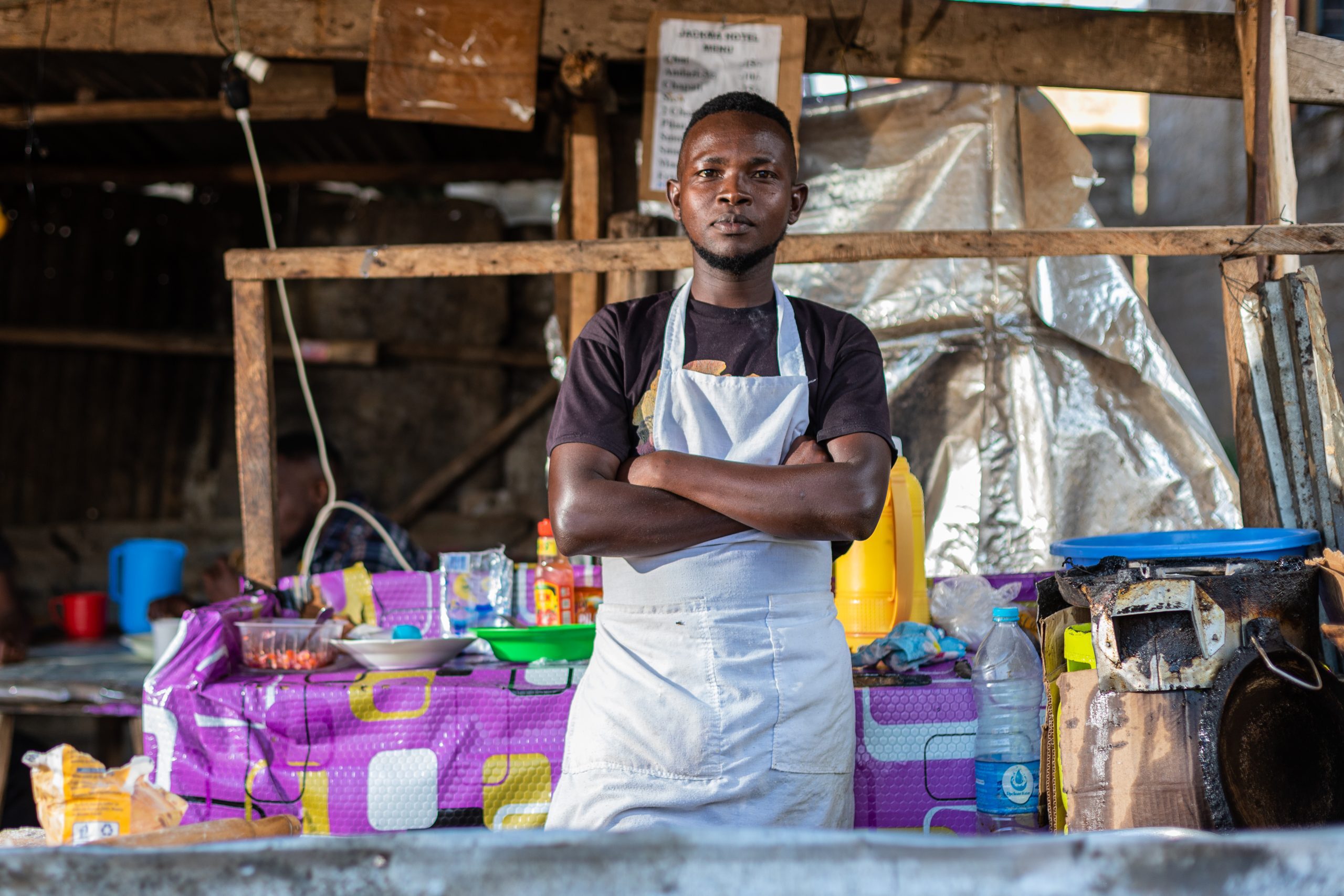
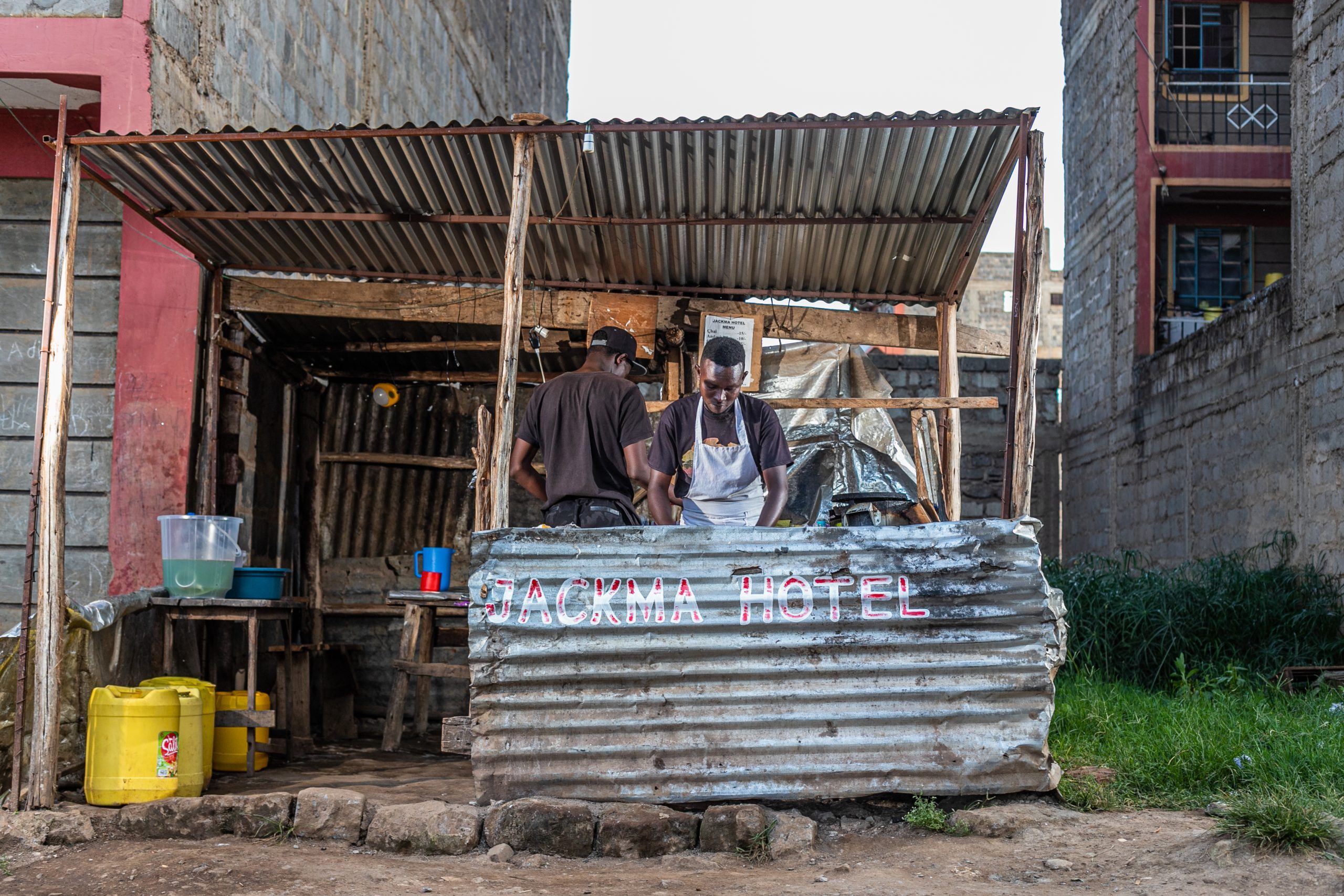
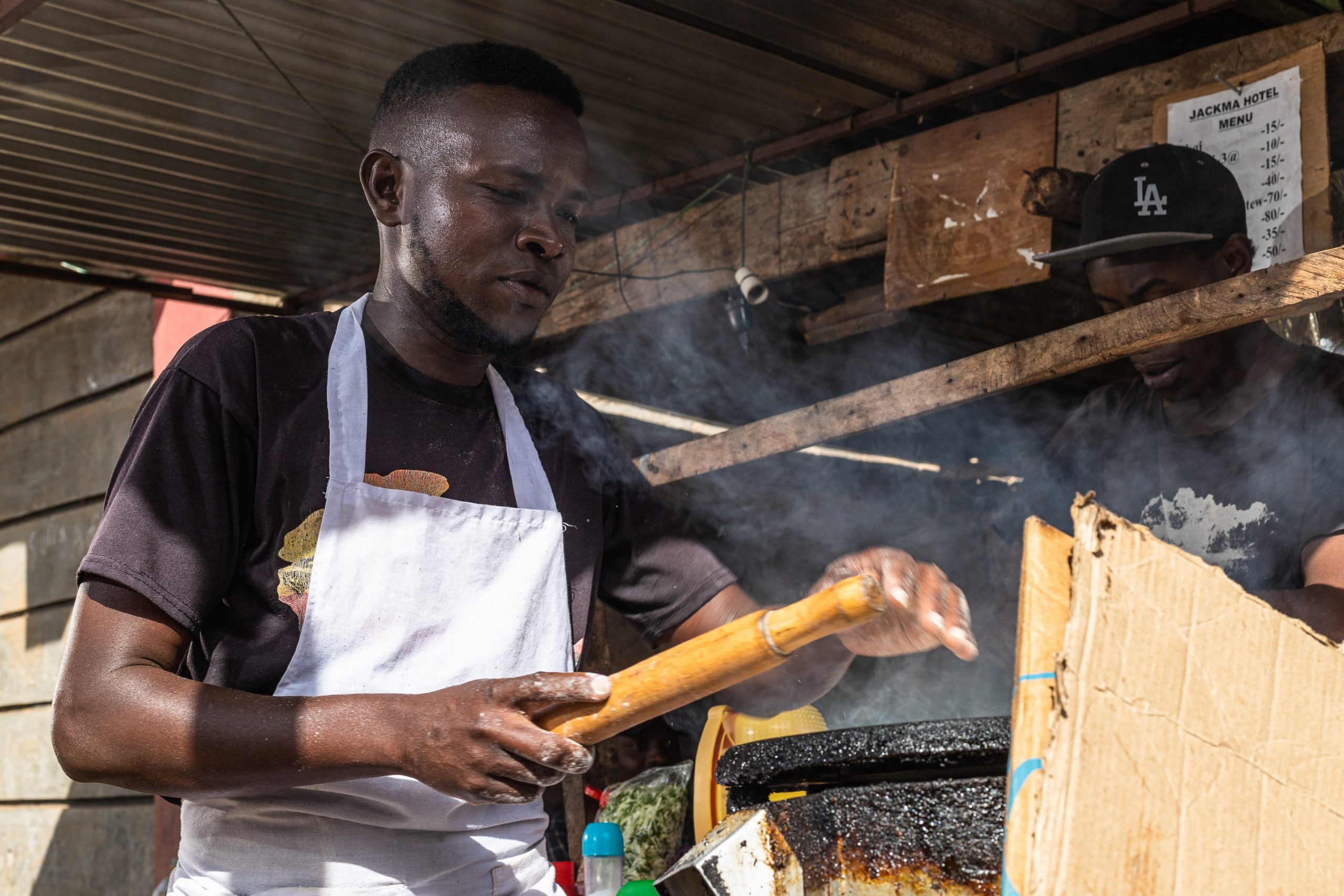
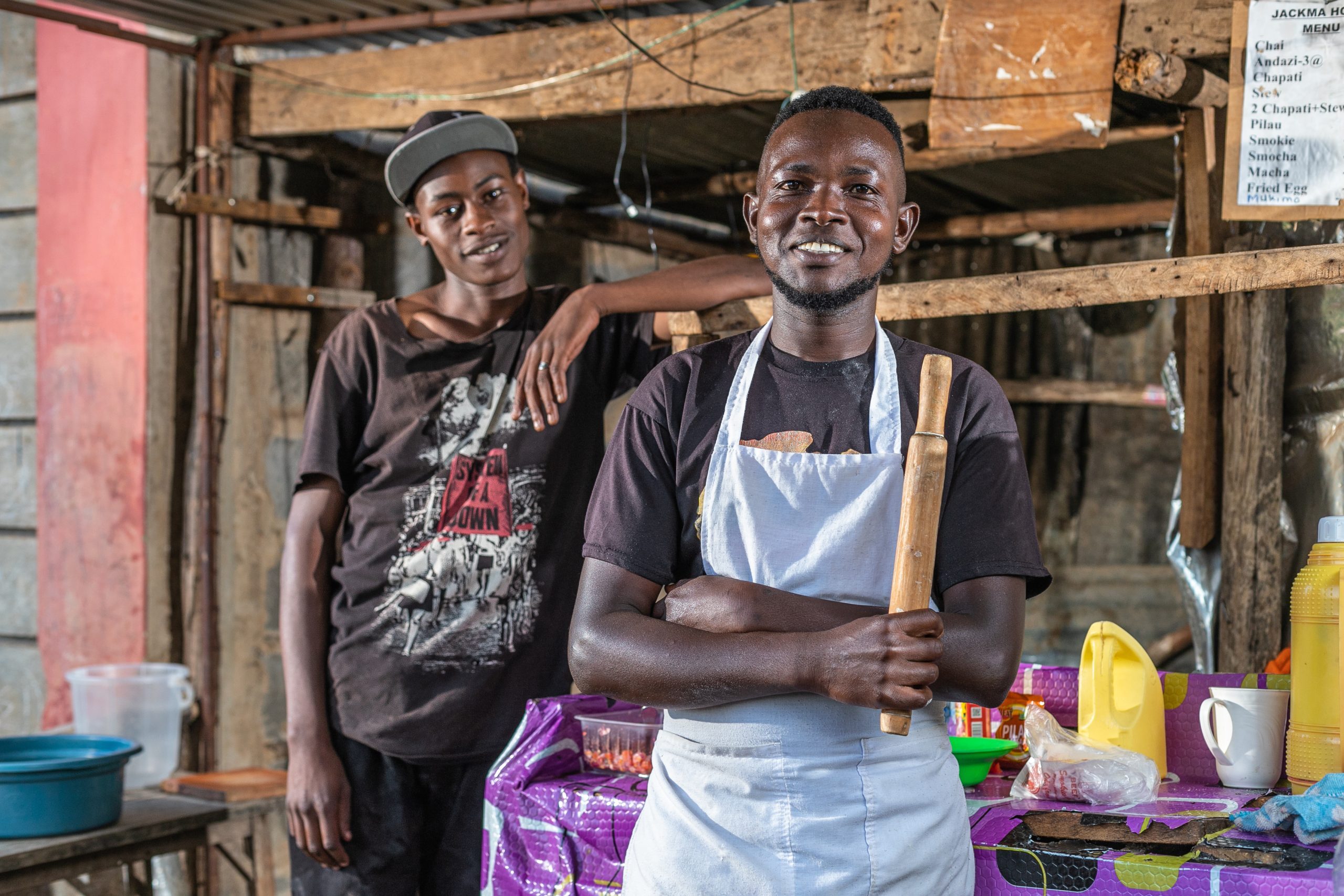
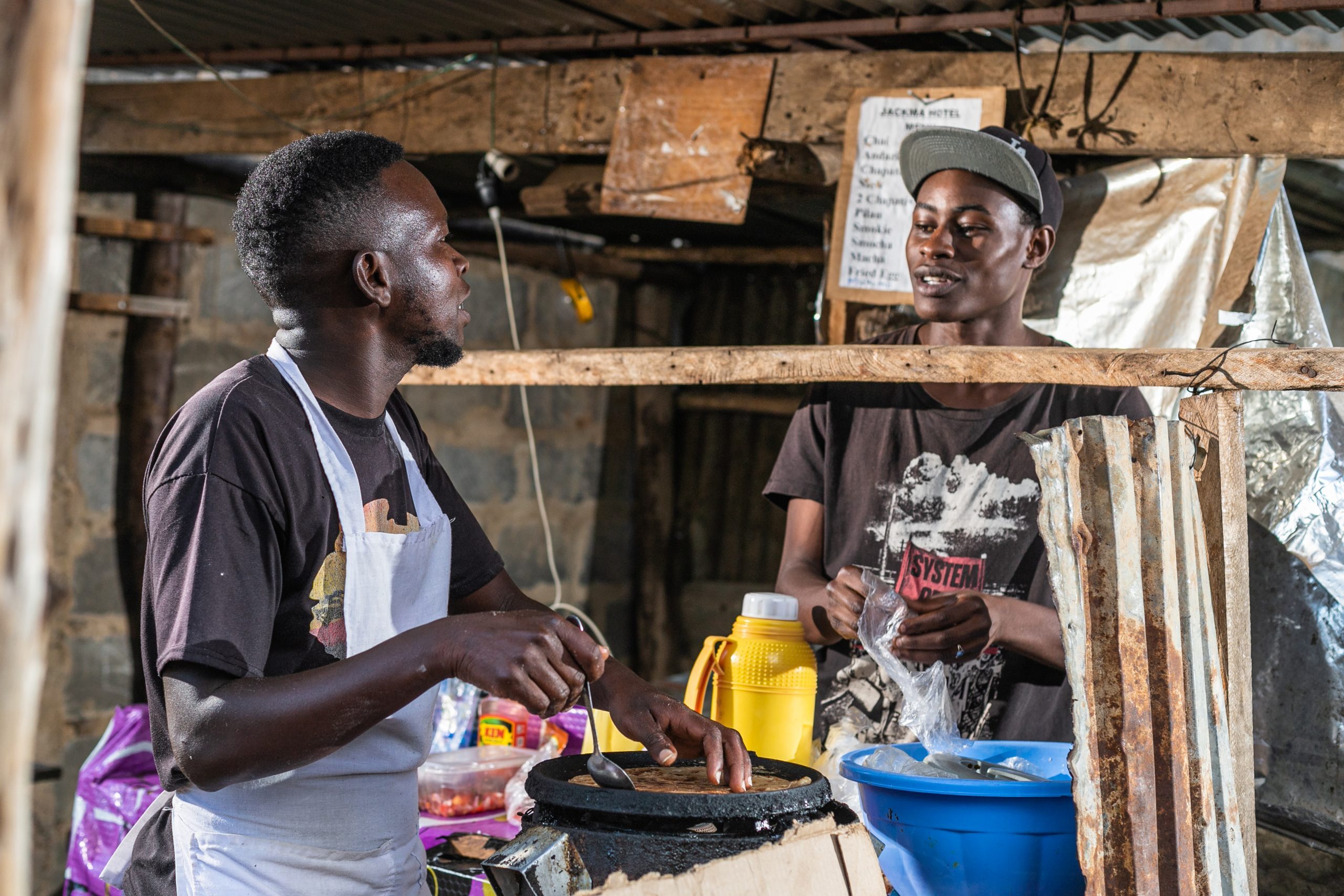
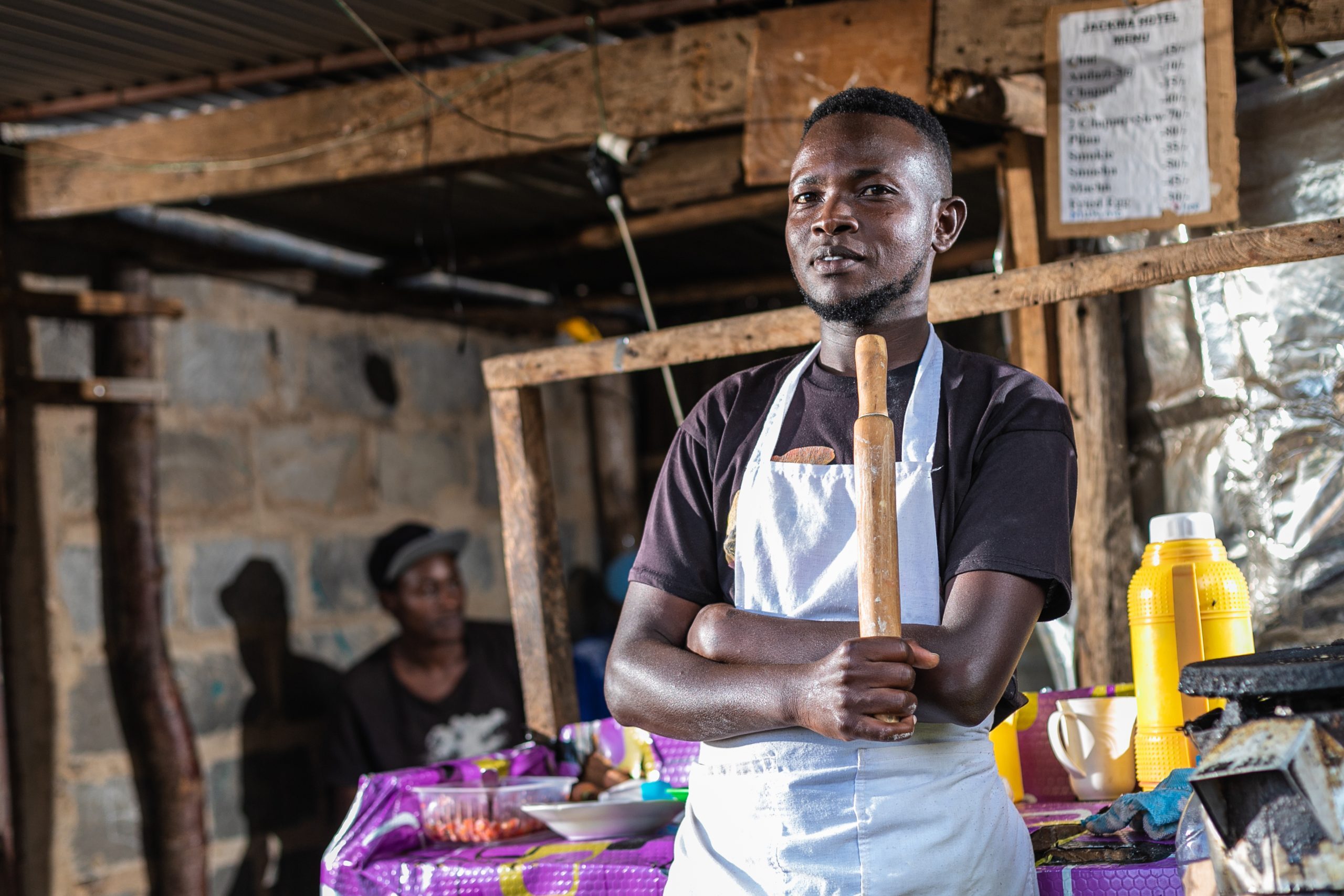
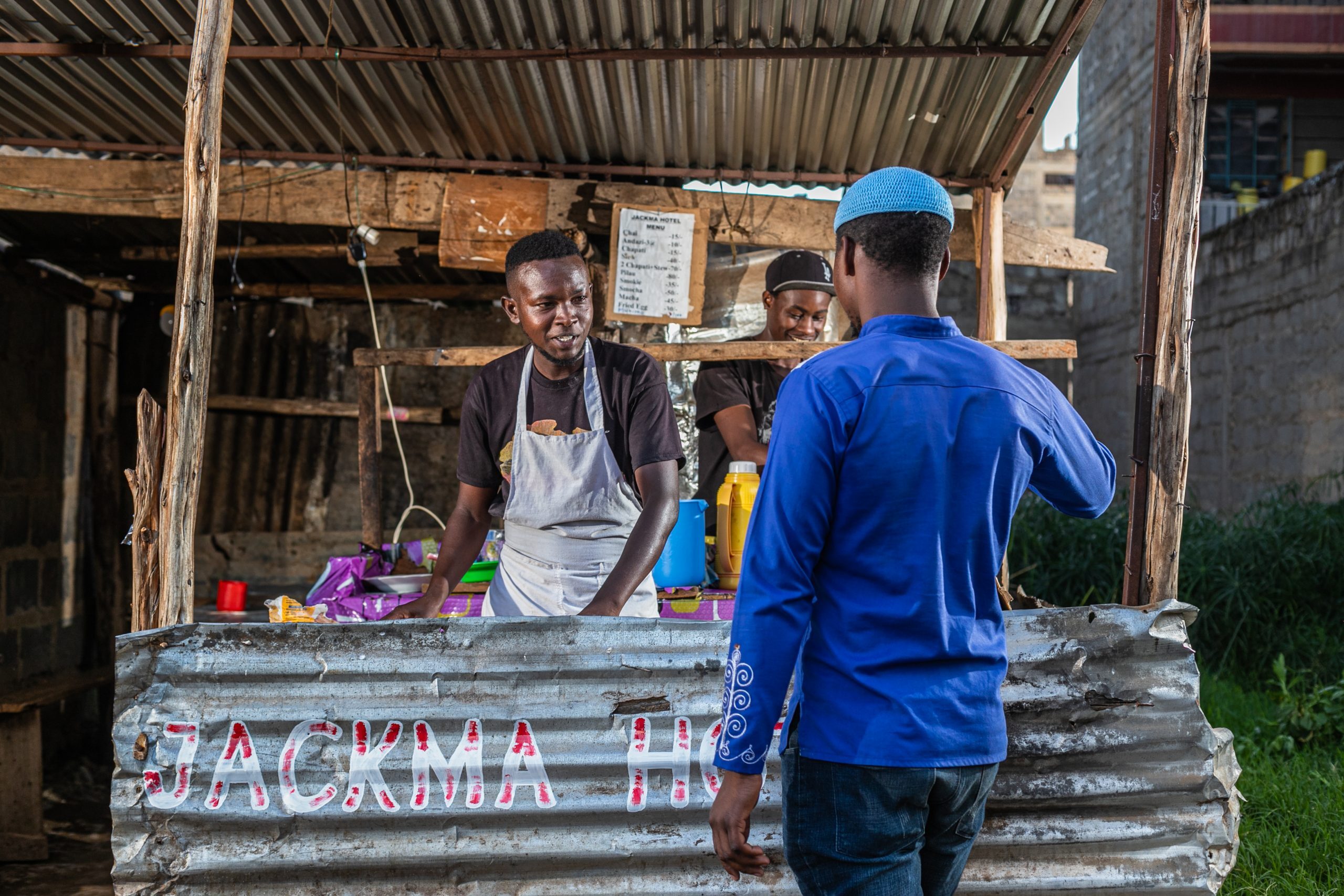
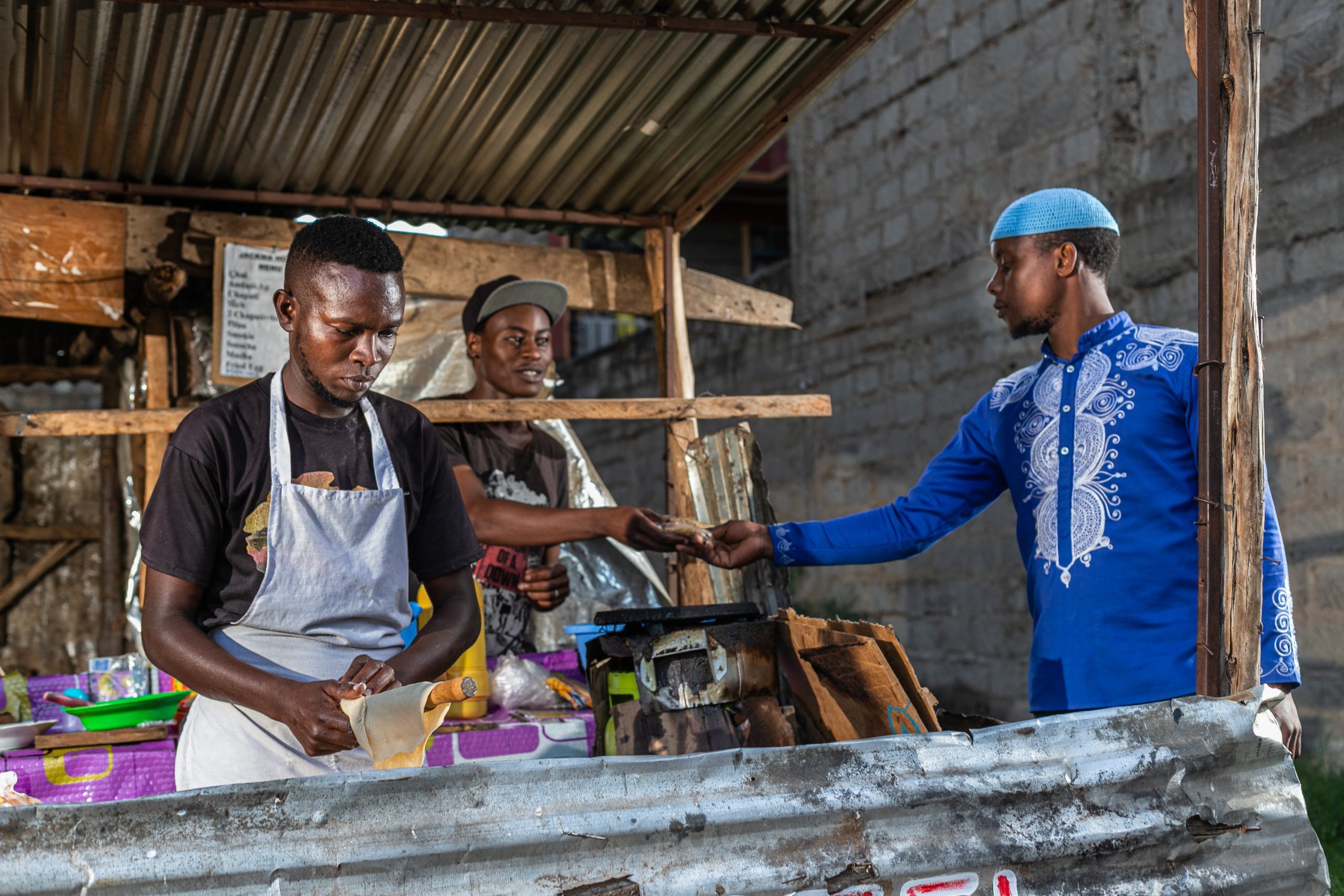
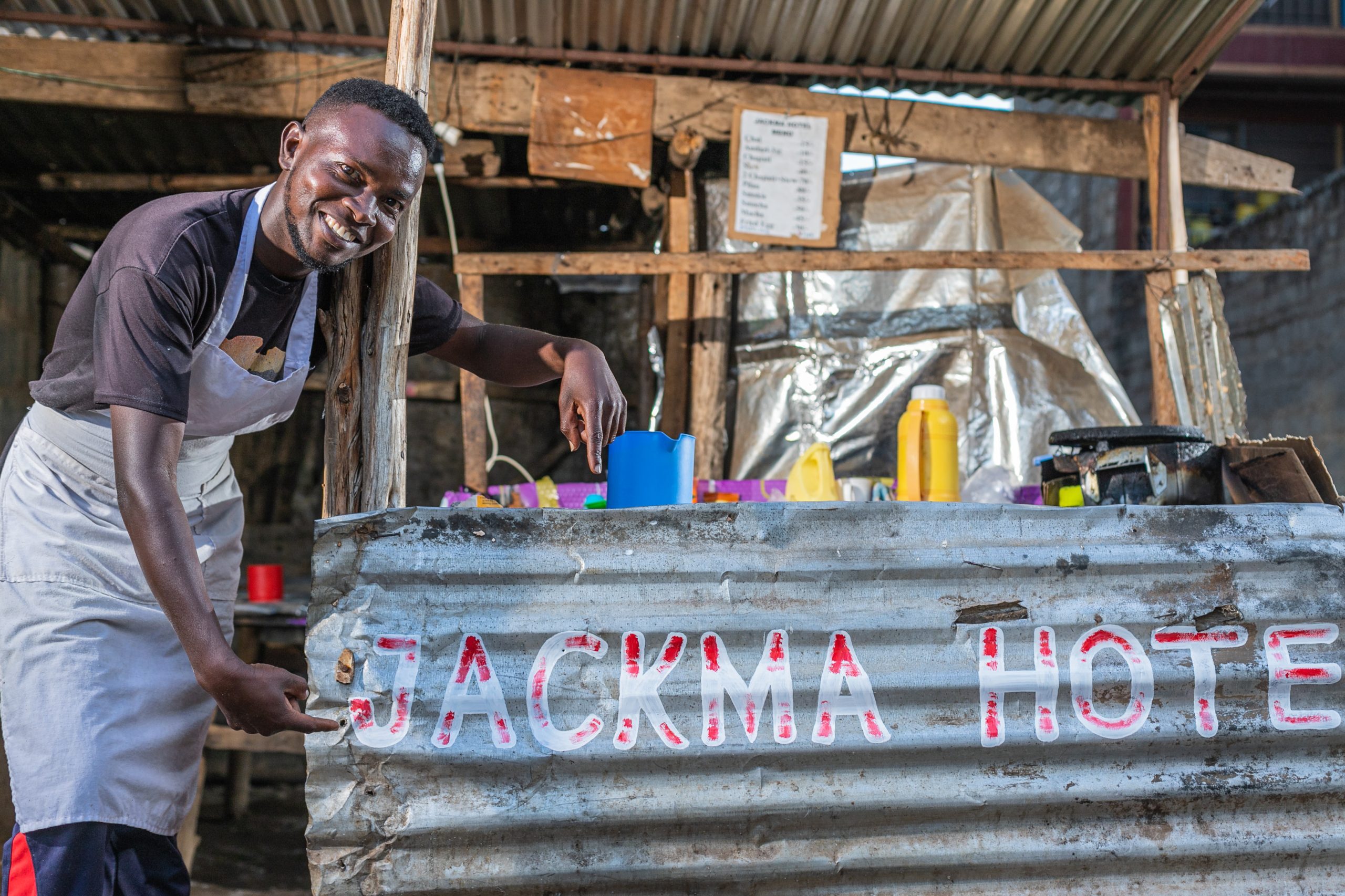
Jackson rises before the sun and begins his day crafting mandazi and making tea for the 5 am crowd. He honed his culinary skills through the hands-on experience of working alongside his mother in her cooking business, and he’s used them ever since he lost his job during the COVID-19 pandemic.
Like many in the Food Service Provision segment, location is crucial. Jackson works close to where he lives in a residential neighbourhood, which he knows is useful for efficiency and getting to know his customers, although fluctuating footfall throughout the day can be challenging.
Though Jackson’s business may have started through necessity, it is driven by genuine passion both for food and people. Jackson has now passed on his culinary and business skills to four employees, including Allan, whom he mentors and supports. Jackson aspires to expand his business into a nationwide chain of restaurants, driven by his desire to enhance the quality of life for his family and uplift those around him.
The importance of the informal economy in Kenya cannot be overstated; it accounts for 24% of Kenya’s GDP and also employs five times more workers than the formal economy.
TRANSFORM has been working to understand the current realities and future possibilities for the millions of entrepreneurial Kenyans who hustle to sustain livelihoods across the informal economy (read more about the context of the work here).
Brink, Procol Africa, Busara, Laterite, Ideas Unplugged, and TRANSFORM have collaborated throughout to deliver this work, alongside hundreds of ecosystem actors and informal economy entrepreneurs.
These blogs offer an insight into the lives of some informal workers we spoke to over the course of the project, told through images.