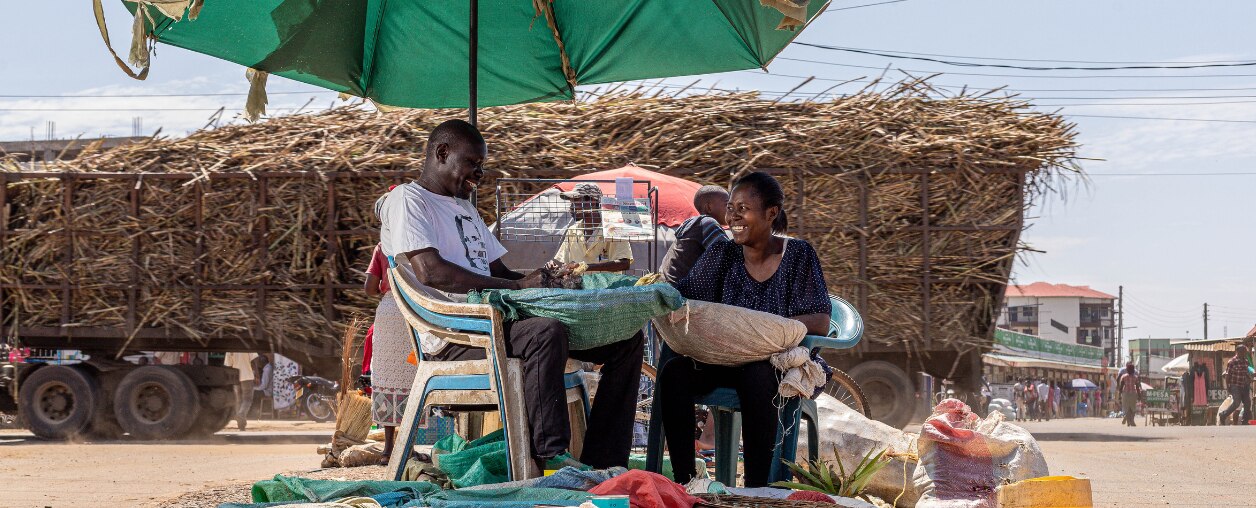
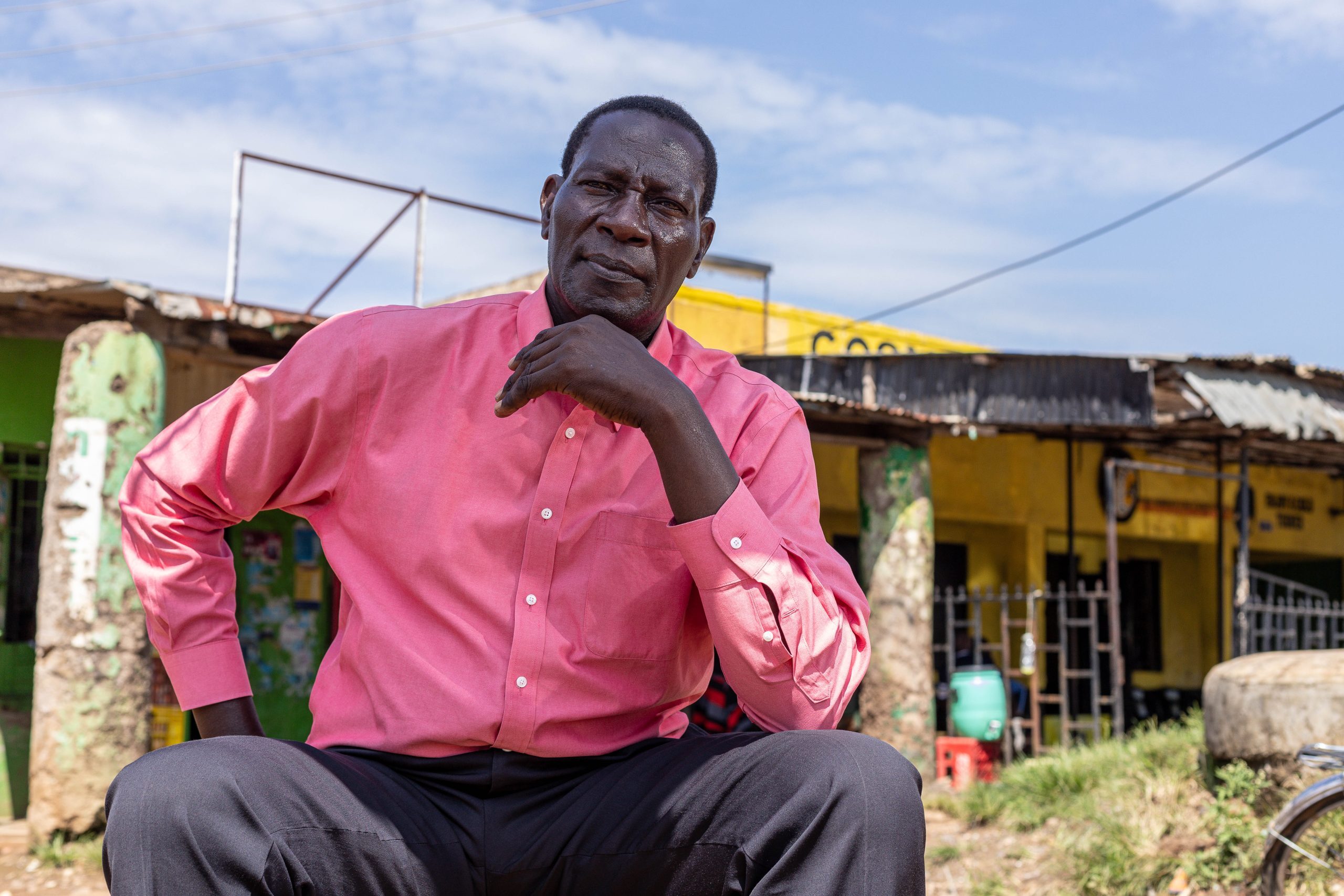
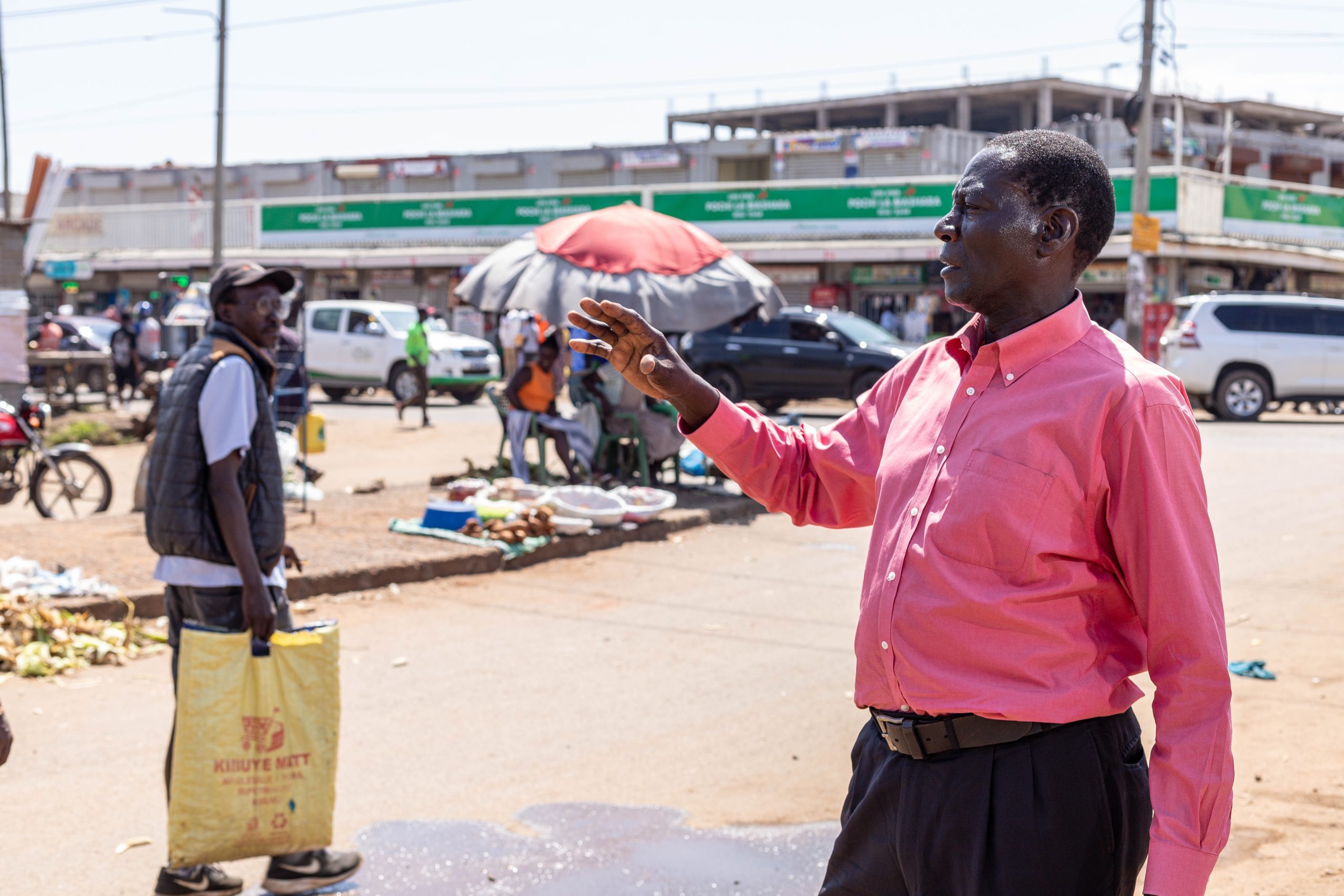
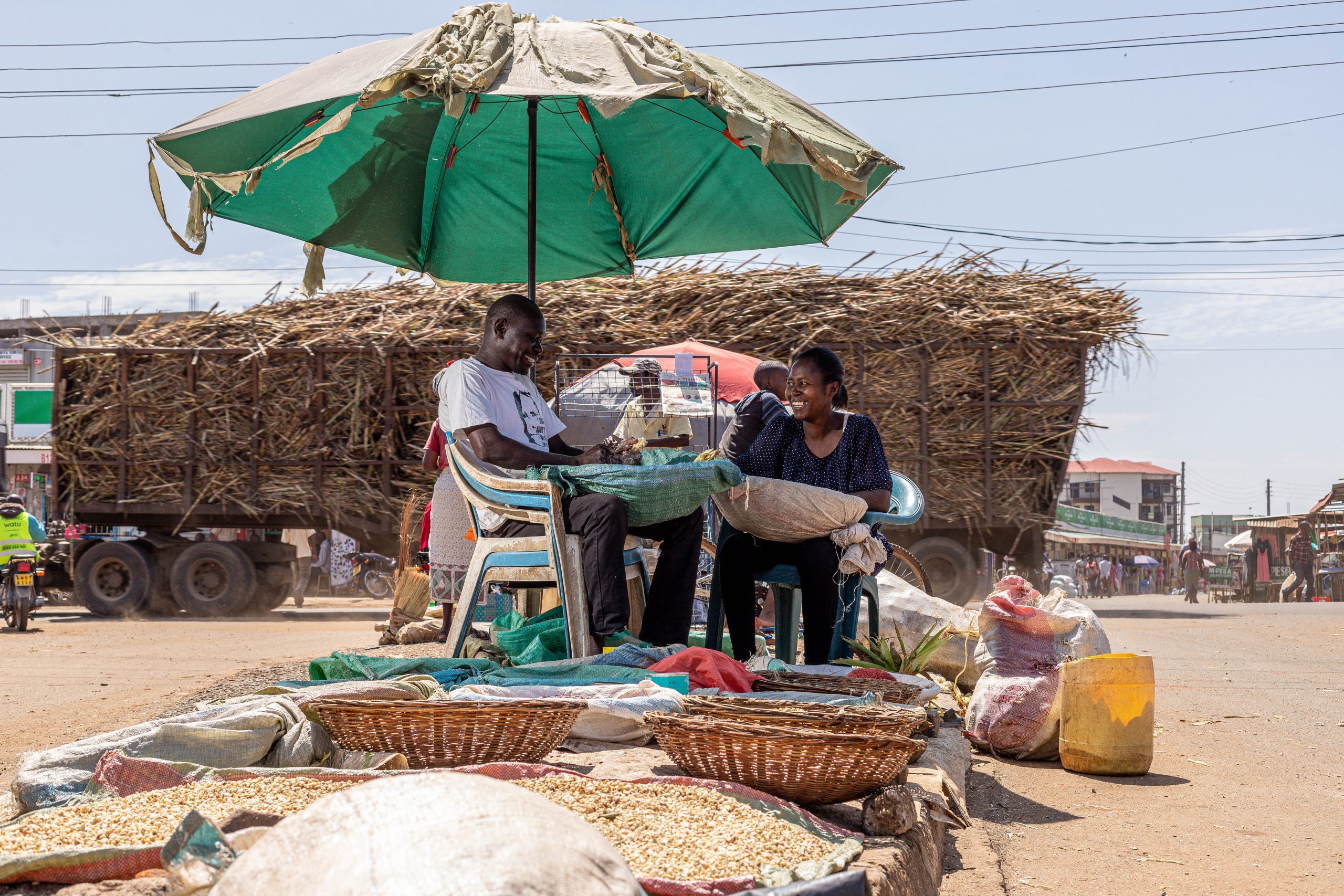
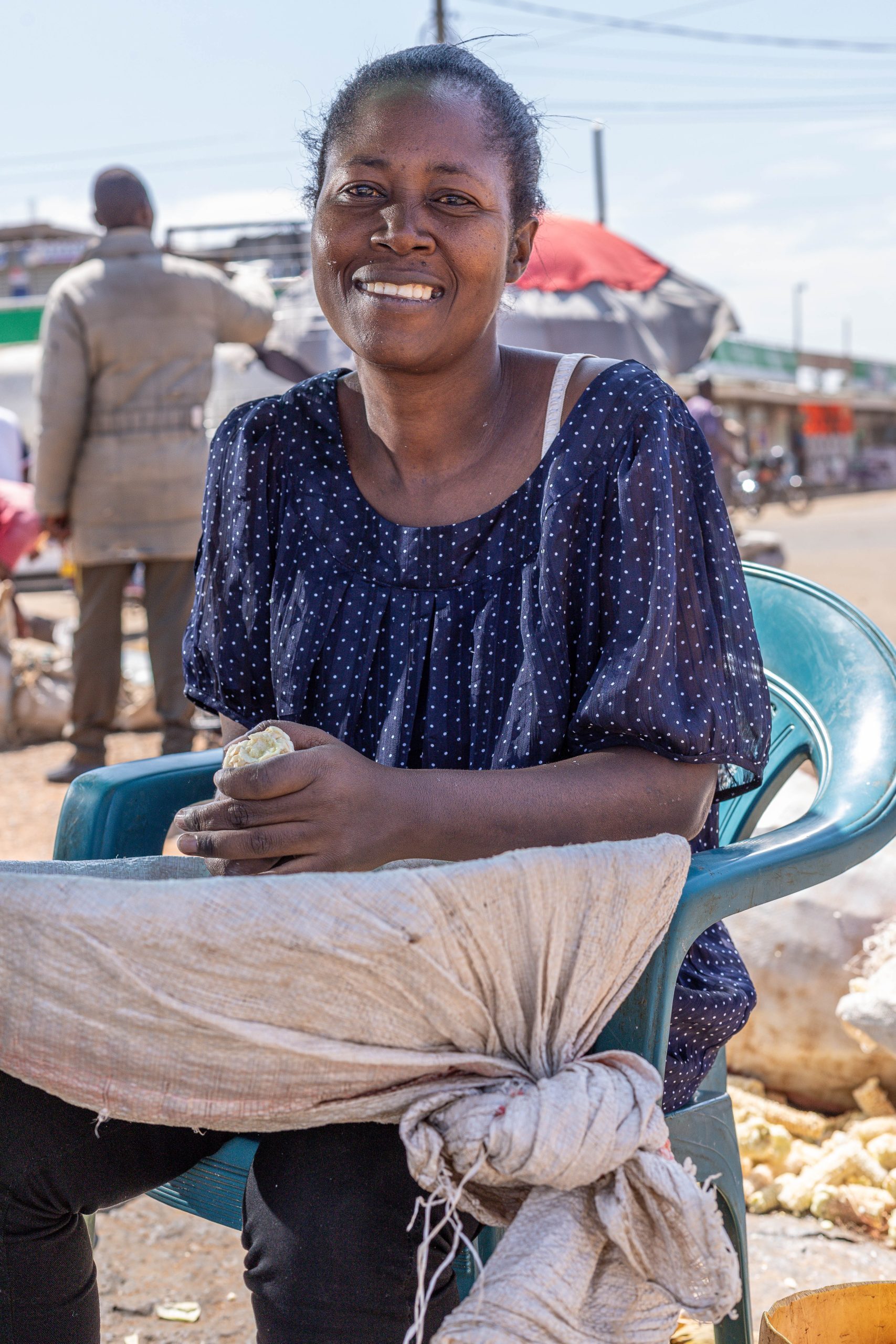
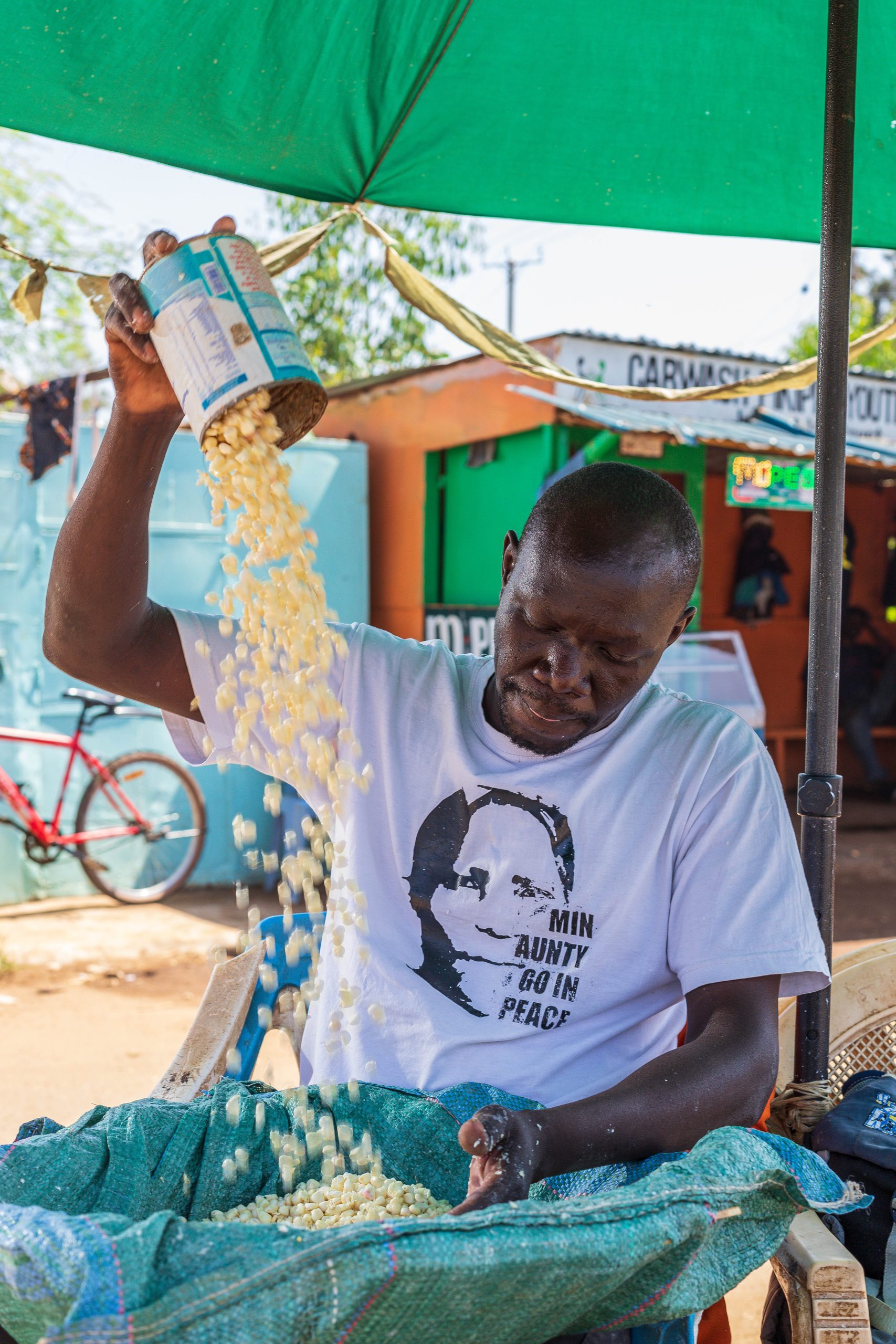
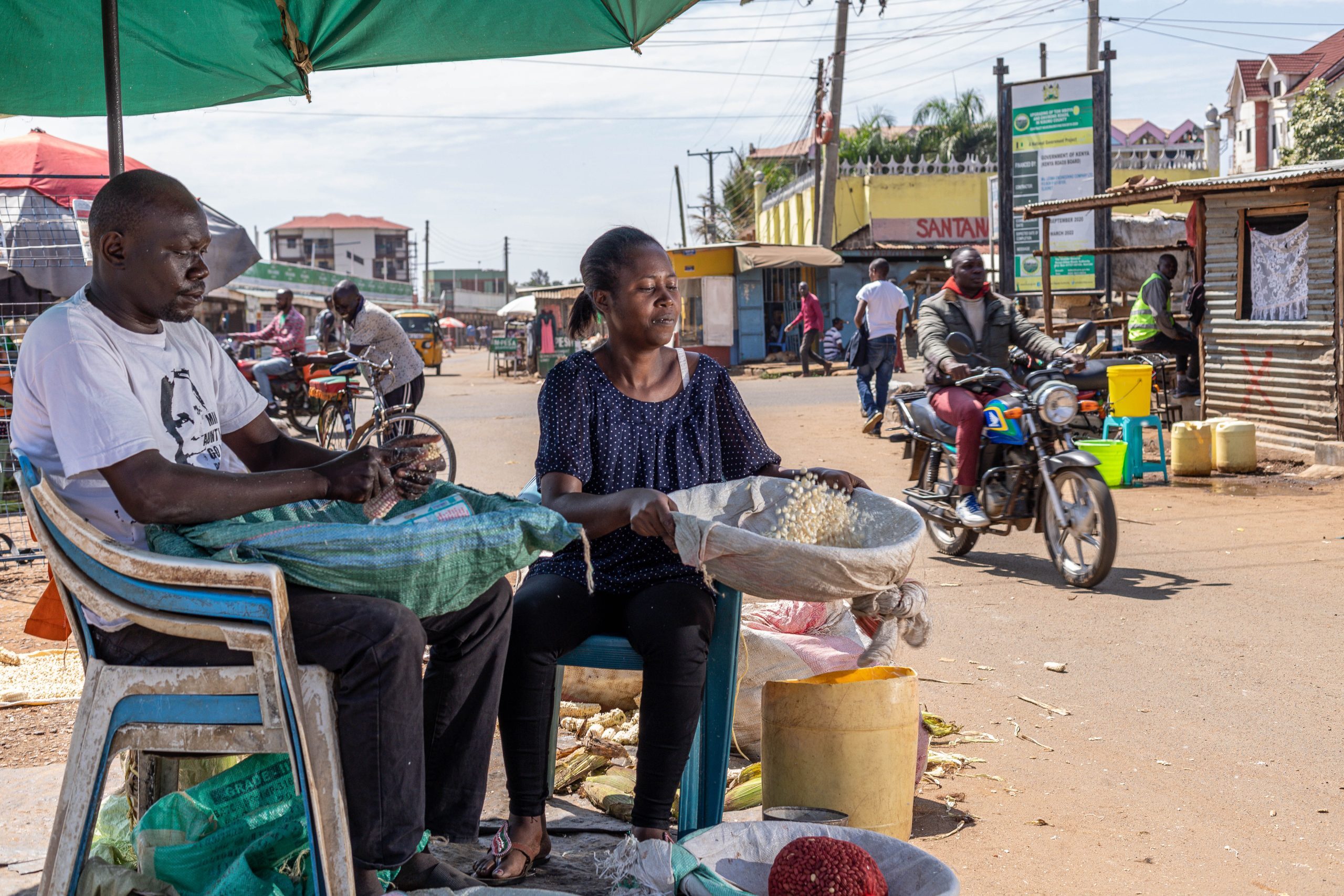
A car wash isn’t perhaps the most obvious place to run a cereals business, but siblings Enock and Everlyne are savvy enough to know that when it comes to maintaining a steady flow of customers, location is key.
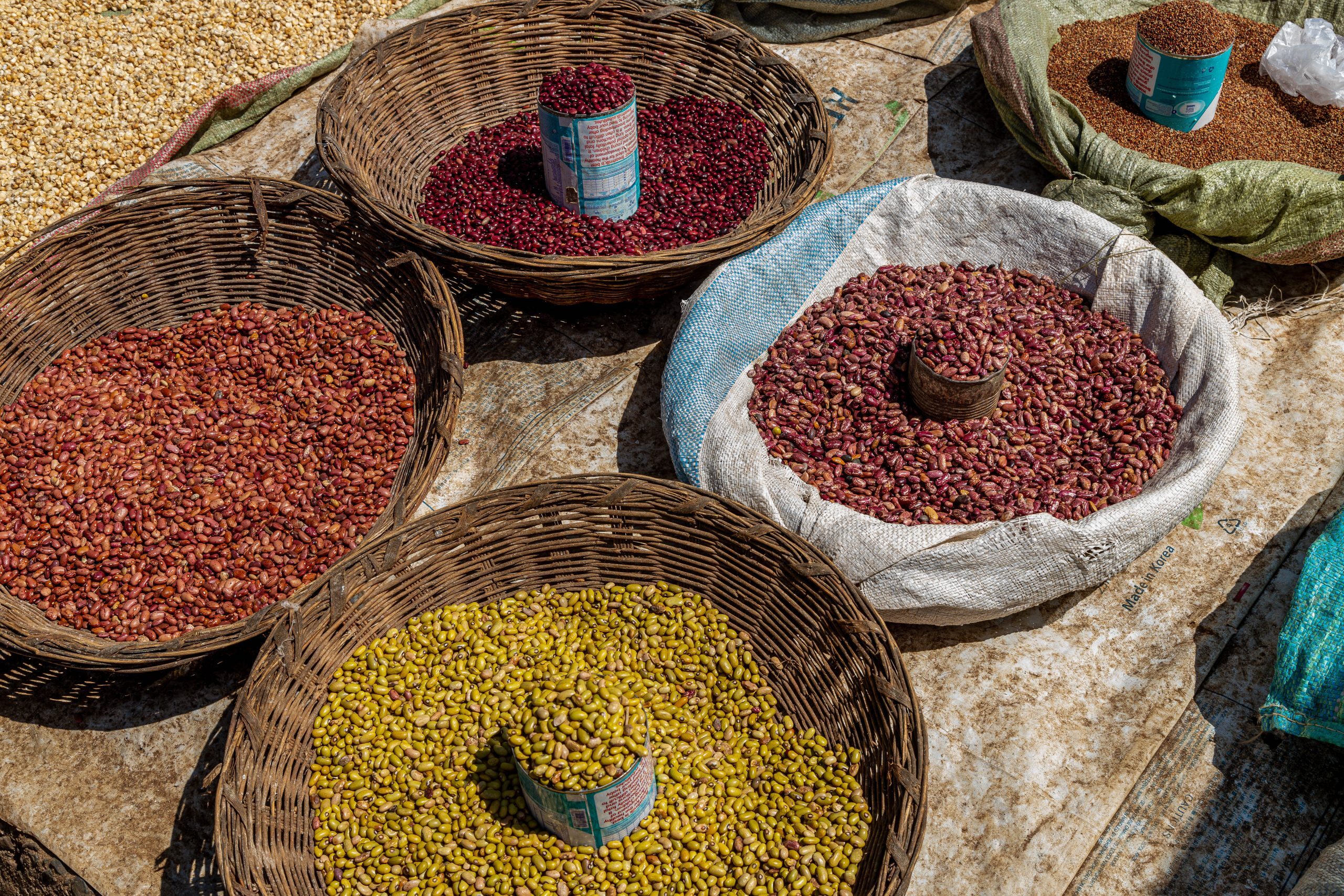
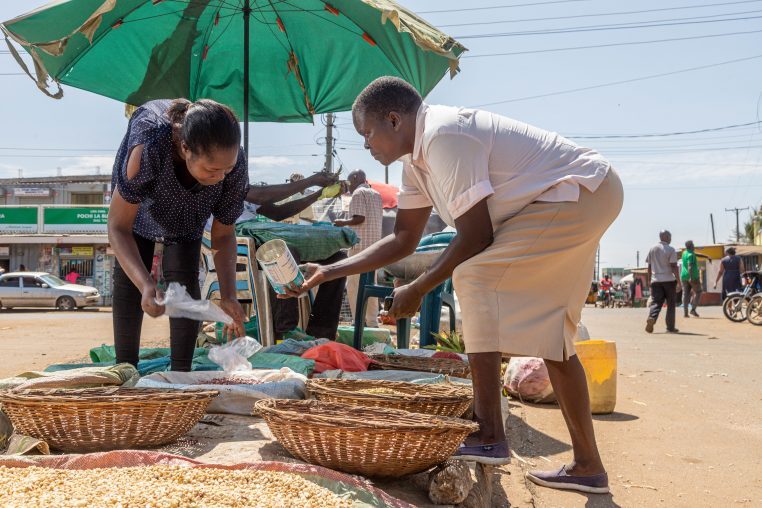
Over the years, they have found and serviced a niche market among local hotels and restaurants, who make regular evening visits to buy produce. To ensure a diverse and stable supply chain and to satisfy returning customers, Enock sources cereals from up to 110 kilometres away.
At the core of their business is a fundamental principle; everyone needs to eat. Enock is clear that this is both about the commercial viability of his enterprise and a commitment to addressing a fundamental need within the community. As well as providing a livelihood for Enock, his nephew Victor actively contributes to the business and receives hands-on experience and skills. This business is at the heart of the wider family’s prosperity.
The importance of the informal economy in Kenya cannot be overstated; it accounts for 24% of Kenya’s GDP and also employs five times more workers than the formal economy.
TRANSFORM has been working to understand the current realities and future possibilities for the millions of entrepreneurial Kenyans who hustle to sustain livelihoods across the informal economy (read more about the context of the work here).
Brink, Procol Africa, Busara, Laterite, Ideas Unplugged, and TRANSFORM have collaborated throughout to deliver this work, alongside hundreds of ecosystem actors and informal economy entrepreneurs.
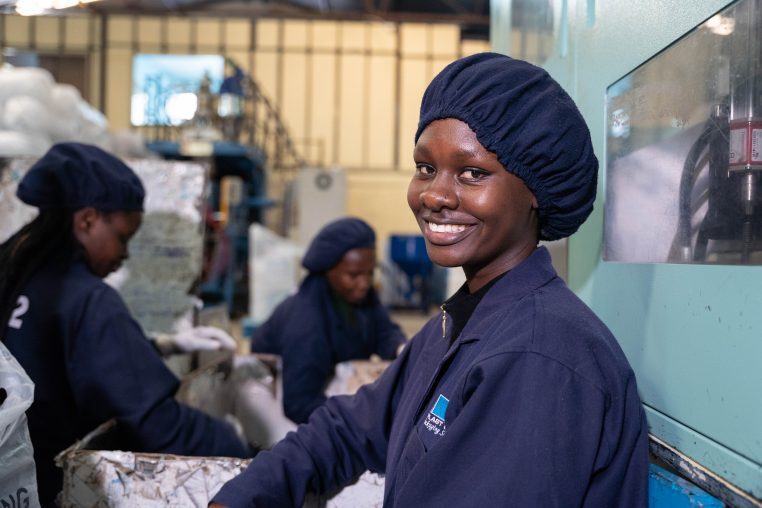
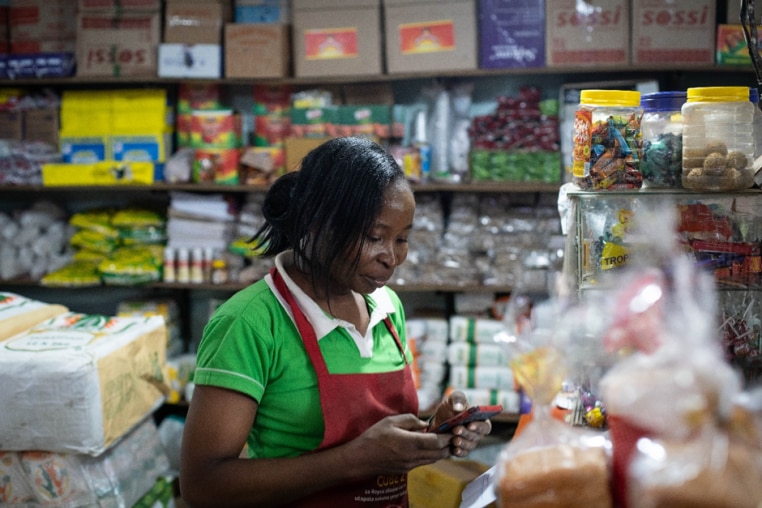
These blogs offer an insight into the lives of some informal workers we spoke to over the course of the project, told through images.